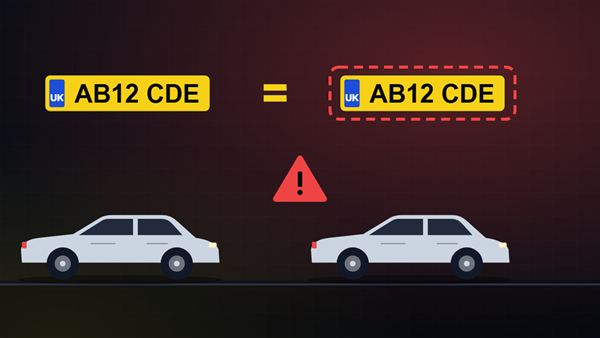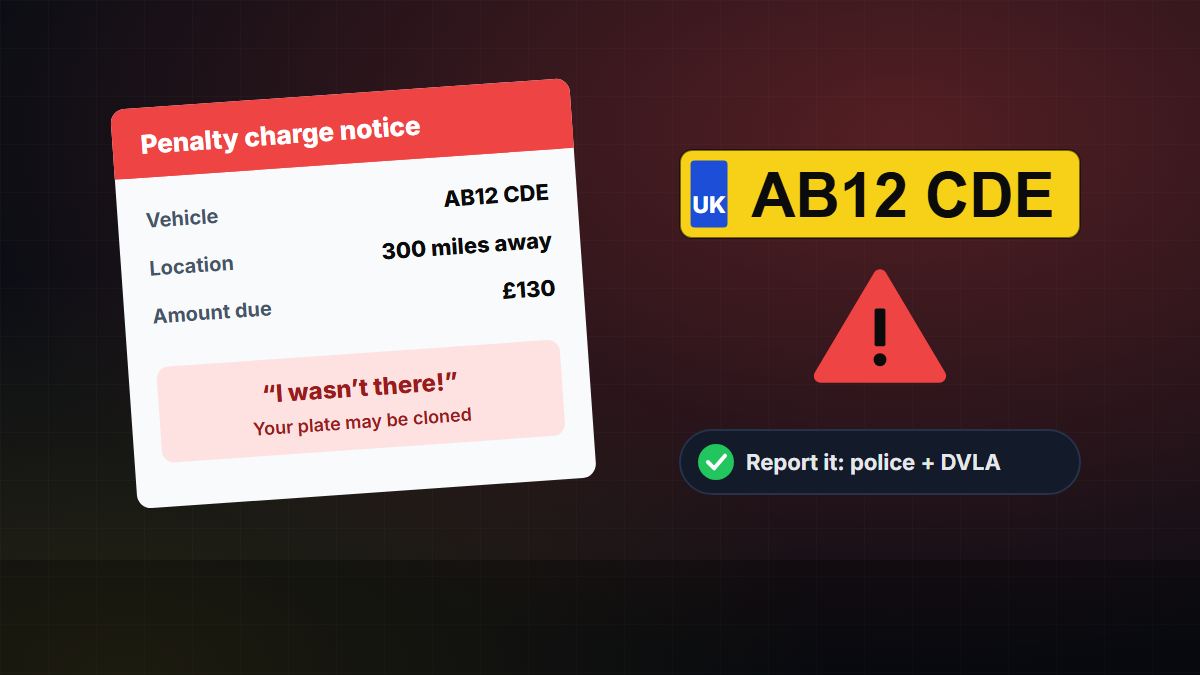
Plate cloning is when criminals copy your registration onto another car, usually the same make, model and colour, so that speeding tickets, parking fines and congestion charges are sent to you instead of them. It’s stressful, but it can be sorted. Here’s how to recognise it and what to do.
Signs your plate has been cloned
- Parking tickets, speeding notices, ULEZ or toll charges for places you’ve never been, or at times you were somewhere else.
- Camera photos showing a car that isn’t quite yours: a different trim, wheels, a dent or sticker you don’t have.
- Letters about fuel drive-offs or a visit from the police about an incident you know nothing about.
What to do, step by step
- Don’t ignore the letters. Fines that are ignored escalate, even when they aren’t yours. Note every reference number and deadline.
- Report it to the police. Call 101 or report online. Ask for a crime reference number: you’ll need it for everything else.
- Challenge each penalty with the issuer. Write to the council, police force or company that sent it. Include the crime reference number, photos of your car showing the differences, and evidence of where you were, such as work records, receipts, train tickets or dashcam footage.
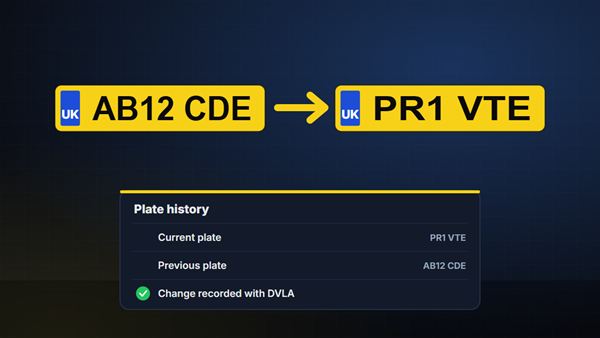
- Tell the DVLA. Write to them with the crime reference number and copies of the penalties. In persistent cases you can ask for a new registration number for your car.
- Tell your insurer, in case the cloned car is involved in an accident.
How to make your plates harder to copy
- In the UK, number plates must be made by a registered number plate supplier, who has to see ID and proof that you’re entitled to the registration, such as the V5C. Never buy plates from a seller that doesn’t ask.
- Fit your plates with security screws so they can’t easily be taken off.
- Avoid posting photos of your car online with the plate visible, especially in for-sale adverts. Blur it out.
- A dashcam and a regular parking place give you an easy alibi if you ever need one.
Buying a car? Watch for the other side of cloning
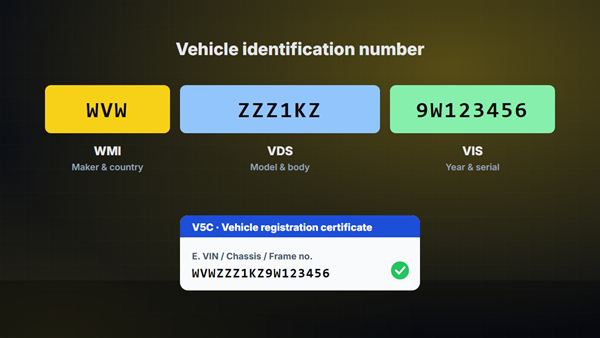
Cloned plates are also used to sell stolen cars with a clean-looking history. Our guide How to spot a cloned car explains how to check the VIN, the V5C and the history before you buy, and How to decode a VIN shows what to compare.
Frequently asked questions
Do I have to pay a fine if my plate was cloned?
No, if you can show it wasn’t your car. Challenge the fine with the issuer, giving your crime reference number and evidence of where your car was.
Can the DVLA give me a new number plate?
In persistent cloning cases you can ask the DVLA for a new registration number. You’ll need the police crime reference number and evidence of the penalties.
How do criminals clone a number plate?
Usually by copying a registration they’ve seen on the road or online onto a similar-looking car, using plates from a supplier that doesn’t check ID and the V5C.