Plenty of cars have had a private plate at some point. That’s harmless. But a plate change can also be used to hide a car’s past, so it’s worth knowing which is which.
Innocent reasons
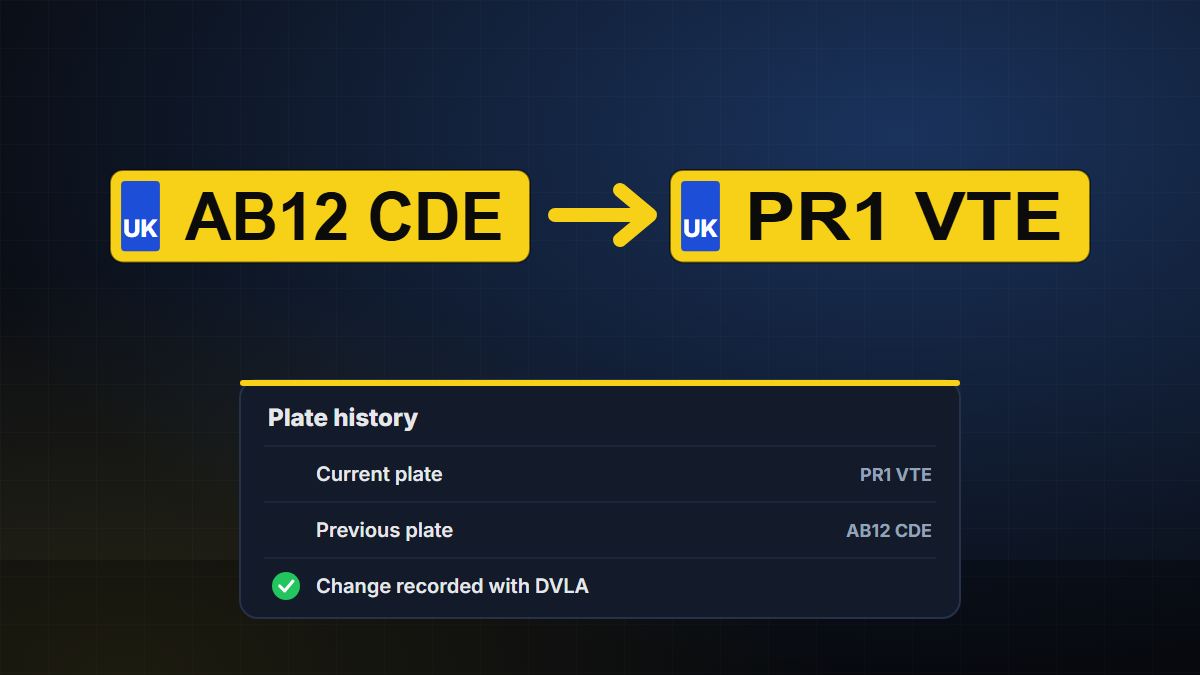
The most common reason is a private (cherished) registration. When an owner moves their personalised plate to a new car, the old car goes back to its original or a new age-related plate. You’ll often see one or two changes like this.
When to be suspicious
- Several plate changes in a short time.
- A recent change just before the car was advertised.
- A plate change after a write-off or theft record.
Changing the plate doesn’t erase a car’s history: the records follow the VIN. But a seller hoping you won’t check might rely on the new plate looking clean.
How to check
Our number plate check shows the vehicle details for any plate, and the Essential and Complete checks list previous plate changes with dates.
Does a private plate affect value?
Not usually. If the seller is keeping their private plate, make sure it’s transferred off and the car is on its new plate before you pay, so the V5C you receive is correct.
Frequently asked questions
Does a car’s history stay with it after a plate change?
Yes. History records are linked to the vehicle identification number (VIN), not just the plate.
Is it bad if a car has had a private plate?
No. It’s very common and usually means nothing.
How do I check if a car has changed plates?
A paid history check lists previous registration numbers with the dates they changed.