Every car has a 17-character vehicle identification number (VIN), a bit like a fingerprint. Unlike a number plate, it stays with the car for life. Knowing where to find it and what it means is one of the simplest ways to make sure the car in front of you is the one on the paperwork.
Where to find the VIN
- Windscreen: a small plate at the bottom corner of the windscreen, readable from outside.
- Door pillar: a sticker or plate on the frame when you open the driver’s or front passenger door.
- Stamped into the body: often under the bonnet, on the bulkhead, or under a flap in the carpet by the front seat.
- V5C logbook: section E, “VIN/Chassis/Frame No.”.
- Service book and invoices: dealers usually print it on paperwork.
The VIN and the chassis number are the same thing. Modern VINs never use the letters I, O or Q, so they can’t be confused with 1 and 0.
What the 17 characters mean
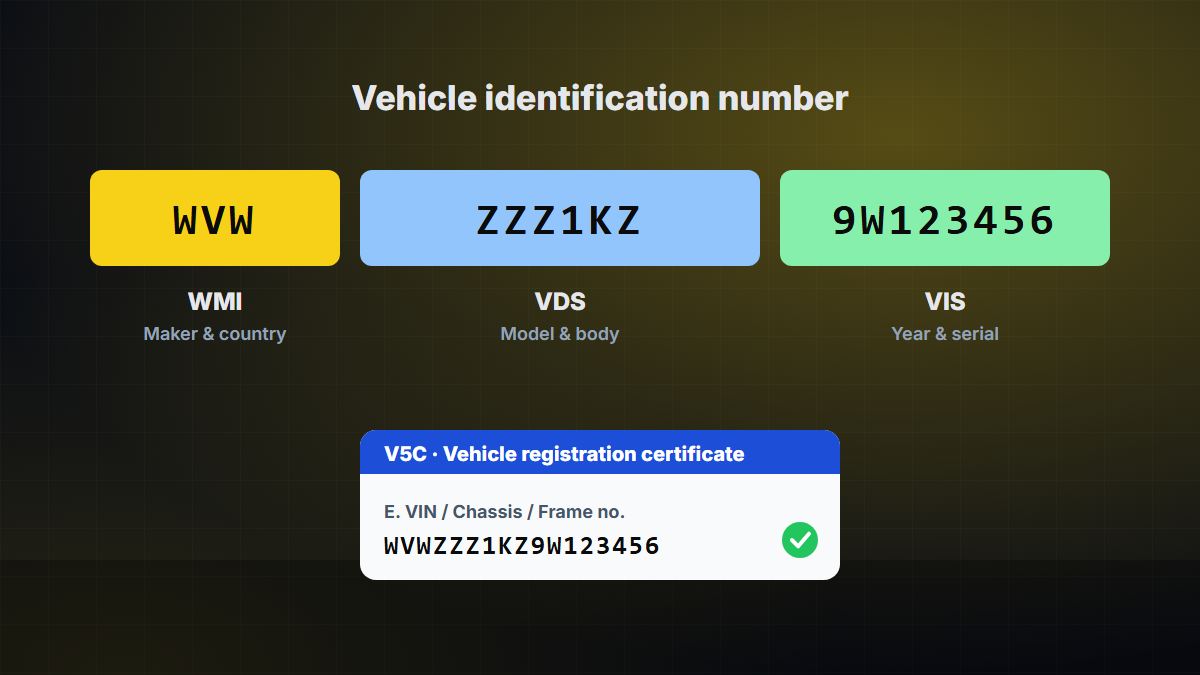
A VIN has three parts:
- Characters 1 to 3, the WMI (world manufacturer identifier): who made the car and where. The first character is the region or country. For example, S is the UK, W is Germany, V is France or Spain, Z is Italy, J is Japan, K is South Korea, and 1, 4 and 5 are the USA.
- Characters 4 to 9, the VDS (vehicle descriptor section): the model, body style, engine and other details, coded differently by each manufacturer. Some European makers fill unused places with Z.
- Characters 10 to 17, the VIS (vehicle identifier section): the individual car. On many cars the 10th character is the model year (for example L = 2020, M = 2021, N = 2022, P = 2023, R = 2024, S = 2025, T = 2026), the 11th is the factory, and the last six are the serial number.
European manufacturers don’t have to put the year in the 10th character, so don’t rely on it to date a car. The first registration date on a free car check or the V5C is a better guide.
How to use the VIN when you buy
- Check that the VIN on the windscreen, the door pillar and the body all match each other.
- Check that they match section E of the V5C logbook. Don’t accept a photo of the logbook: see the original.
- Compare it with your history report. A TrueReg report shows the last characters of the VIN recorded for that registration, so you can confirm the plate and the car belong together.
- Look for signs of tampering: scratched or re-stamped numbers, a VIN plate held on with new rivets or glue, a replaced sticker, or fresh paint around the stamping.
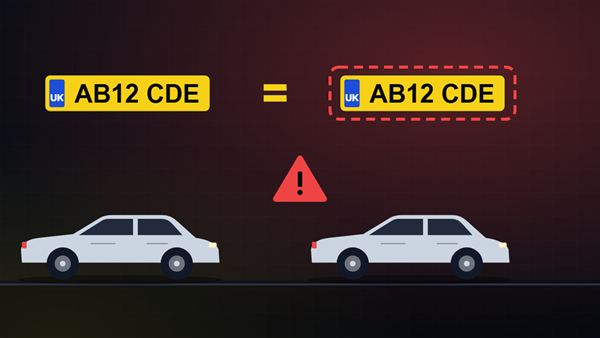
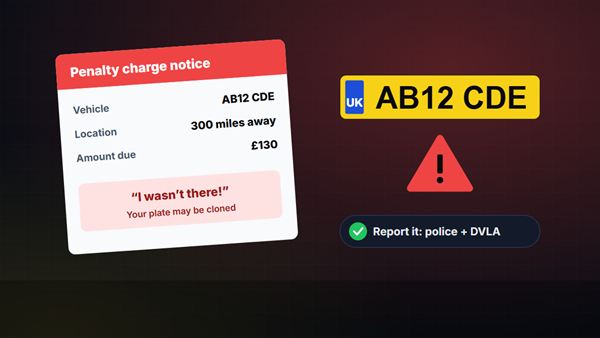
If any VIN doesn’t match, walk away. It’s the clearest sign of a cloned car: a stolen vehicle wearing the identity of a legitimate one, which can be taken back by the police with you out of pocket.
Should you share your VIN?
Giving the VIN to a garage, insurer or genuine buyer is normal. Be wary of posting it publicly alongside the registration and photos, as that is exactly what criminals need to clone a car’s identity.
Frequently asked questions
Is the VIN the same as the chassis number?
Yes. In the UK the VIN is also called the chassis or frame number, and it appears in section E of the V5C logbook.
Can I find a car’s year from the VIN?
Sometimes. Many cars use the 10th character for the model year, but European manufacturers don’t have to. Use the first registration date from a vehicle check instead.
What should I do if the VINs don’t match?
Don’t buy the car. Mismatched or tampered VINs are a common sign of a cloned or stolen vehicle. You can report your concerns to the police on 101.