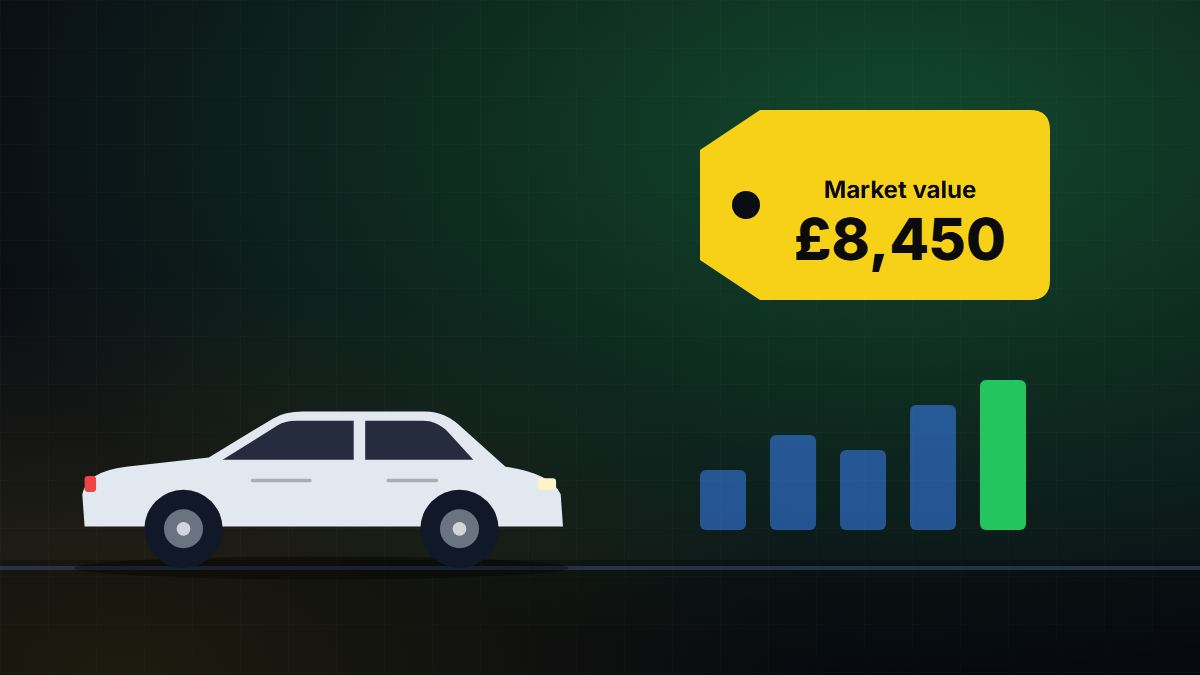
There isn’t one value for a car. What you’ll get depends on who you sell to. Understanding the different valuations helps you buy and sell at a fair price.
The five values
- Dealer retail: what a dealer would sell it for, with preparation and a warranty. The highest figure.
- Private sale: what you’d typically get selling it yourself.
- Part-exchange: what a dealer would offer against another car.
- Trade: what one dealer pays another.
- Auction: what it might fetch at a car auction. Usually the lowest.
Our car valuation shows all five, based on the car’s age, mileage and history.
What affects value
- Age and mileage, the two biggest factors.
- Service history: a full history adds value.
- Condition: dents, scuffs, worn tyres and interior wear.
- History: a write-off record can reduce value by 20% to 40%.
- Colour, fuel type and demand for that model.
Getting the best price
Clean the car, fix small faults, gather the paperwork and take good photos in daylight. Price it realistically against similar cars with similar mileage. See our guide to selling your car privately.
Frequently asked questions
What is the difference between trade and retail value?
Retail is what a dealer sells for. Trade is what a dealer pays. The gap covers preparation, warranty and profit.
Does a write-off affect value?
Yes. A Cat S or Cat N car is typically worth 20% to 40% less than the same car with a clean history.
How accurate are online car valuations?
They’re a good guide. The final price depends on condition, local demand and how you sell.