If a used car goes wrong soon after you buy it, your rights depend mainly on whether you bought from a dealer or a private seller.
Buying from a dealer
The Consumer Rights Act 2015 says a car must be of satisfactory quality, fit for purpose and as described. What counts as satisfactory takes the car’s age, mileage and price into account.
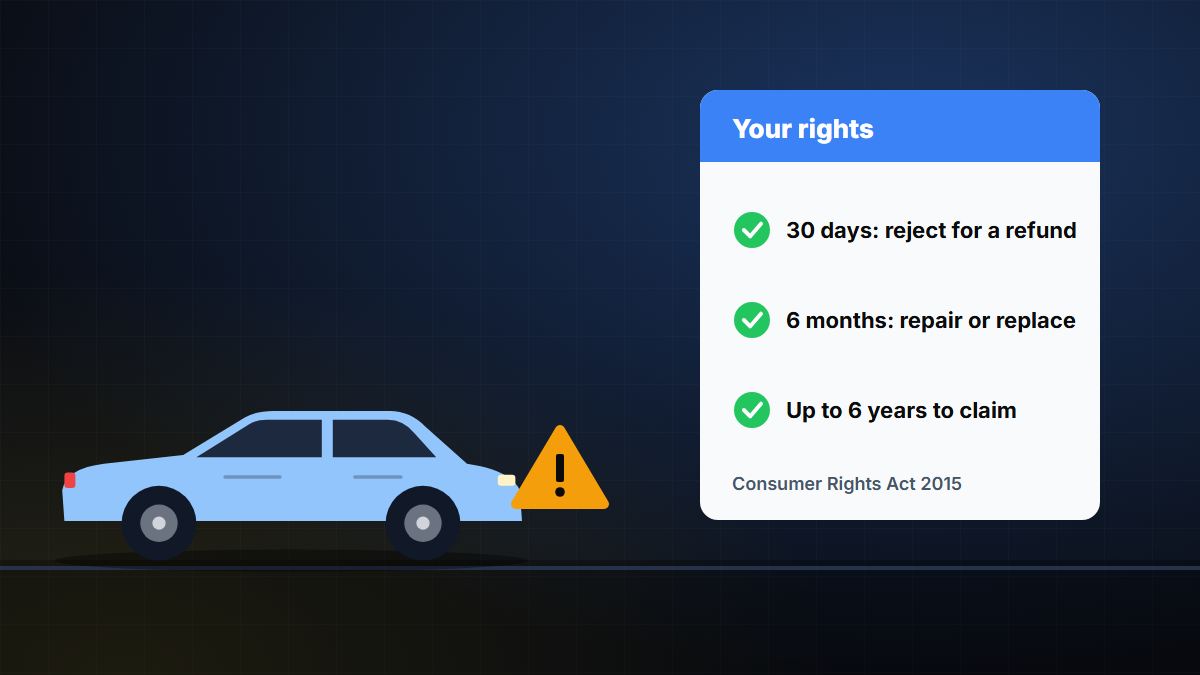
- Within 30 days: you can reject a faulty car for a full refund.
- Within 6 months: the dealer gets one chance to repair or replace it. If that fails, you can reject it (with a possible deduction for use) or ask for a price reduction. It’s assumed the fault was there when you bought it unless the dealer proves otherwise.
- After 6 months: you can still claim, but you need to show the fault was there when you bought it.
Buying privately
A private seller must have the right to sell the car, and it must be as described. If they said “full service history” or “never crashed” and that wasn’t true, you may be able to claim. There’s no requirement of satisfactory quality.
What to do
- Contact the seller in writing as soon as you find the fault.
- Keep records: the advert, receipts, messages and an independent inspection report.
- Get help from the Citizens Advice consumer helpline, or a motoring ombudsman if the dealer is a member.
Prevention is easier
Most disputes come from things a check would have shown: finance, write-offs and mileage. Run a full history check before you buy.
Frequently asked questions
Can I return a used car within 30 days?
If you bought it from a dealer and it’s faulty, yes. You have a short-term right to reject for a full refund.
Does “sold as seen” remove my rights?
Not with a dealer. With a private seller, there’s no satisfactory quality requirement, but the car must still be as described.
Who can help with a car dispute?
Citizens Advice, Trading Standards and, where the dealer is a member, the Motor Ombudsman.