The battery is the most valuable part of an electric car, so its condition matters more than almost anything else when you buy used. The good news is that most EV batteries age slowly and many older cars still have plenty of range. Here’s how to check the one you’re looking at.
State of health (SOH)
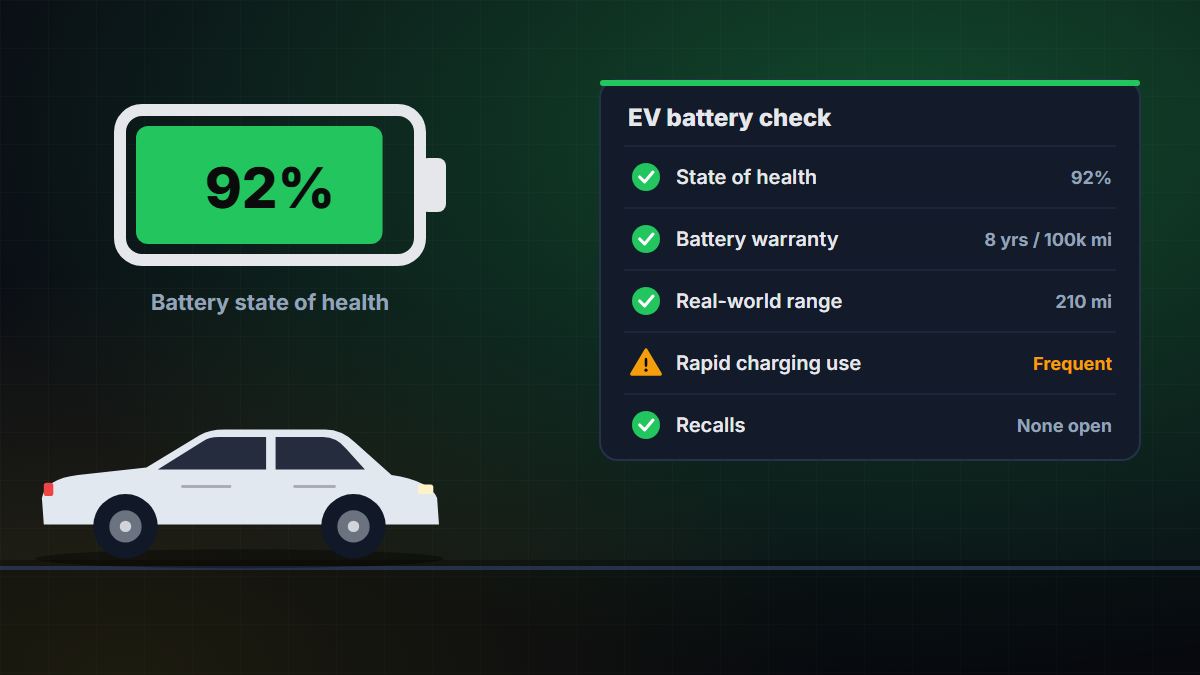
A battery’s state of health is how much charge it can hold now, as a percentage of when it was new. All lithium-ion batteries lose a little capacity over time, usually more in the first few years before it levels off.
- Ask the seller or dealer for a battery health report. Many dealers now supply one from an independent test.
- Some cars show battery health in the on-screen menus or the manufacturer’s app.
- A franchised dealer can read it with their diagnostic equipment, and for some models an OBD reader and phone app will show it too.
As a rough guide, a state of health above about 85 to 90% on a car a few years old is good.
Battery warranty
Most manufacturers cover the battery for around 8 years or 100,000 miles, whichever comes first, against falling below a set capacity, often about 70%. The warranty normally passes to the next owner. It starts from the car’s first registration, so check the date on a free car check to see how much is left, and read the manufacturer’s exact terms.
Do a range test
- Ask for the car to be fully charged before you arrive.
- Note the range shown at 100% and compare it with the official figure when new. Expect it to be lower in cold weather.
- On the test drive, watch how quickly the percentage drops compared with the miles you drive.
Ask how it was charged
Very frequent rapid charging and long periods at 100% or near empty can speed up battery wear, especially in hot weather. Ask the owner how they usually charged it. Some older models without active battery cooling are more sensitive to this.
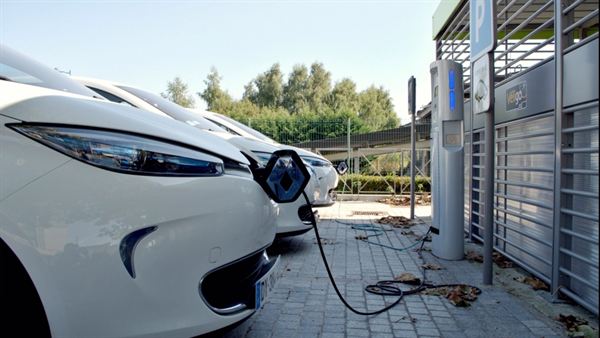
Check the charging port for damage and make sure the cables are included: a Type 2 cable for public chargers and, if the seller has one, a cable for a household socket. Replacement cables can cost a few hundred pounds.
The checks every used EV still needs
- Outstanding finance: many EVs are bought on PCP, so a finance check is essential.
- Write-offs: EVs are sometimes written off after damage near the battery that looks minor. A write-off check shows if it’s been recorded.
- Recalls: make sure any battery or software recall work has been done. See how to check for car recalls.
- MOT history: EVs need an MOT from three years old, and the history shows tyre and brake wear.
For the full buying checklist, read our guide to buying a used electric car.
Frequently asked questions
What is a good battery health for a used EV?
Above about 85 to 90% on a car a few years old is good. Compare it with the battery warranty threshold, which is often around 70%.
Can an electric car battery be repaired?
Often, yes. Many batteries are made of modules that a specialist can replace individually, which costs much less than a whole new battery.
Does the battery warranty transfer to a new owner?
Usually, yes. It normally runs from the car’s first registration date for a set number of years or miles. Check the manufacturer’s terms.