London’s ULEZ gets the headlines, but it isn’t the only emission zone in the UK. Several English cities run Clean Air Zones and Scotland’s four biggest cities have Low Emission Zones. The rules, charges and fines are different in each, so it pays to know them before you buy a car or drive into a city.
The three kinds of zone
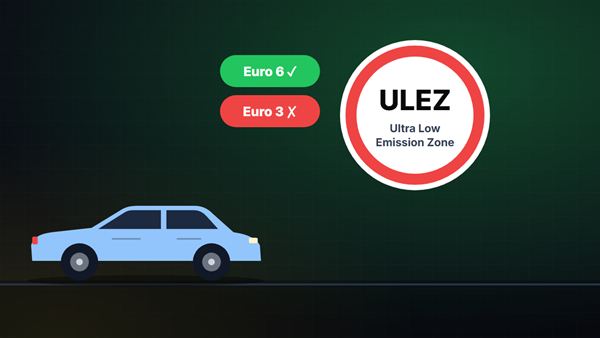
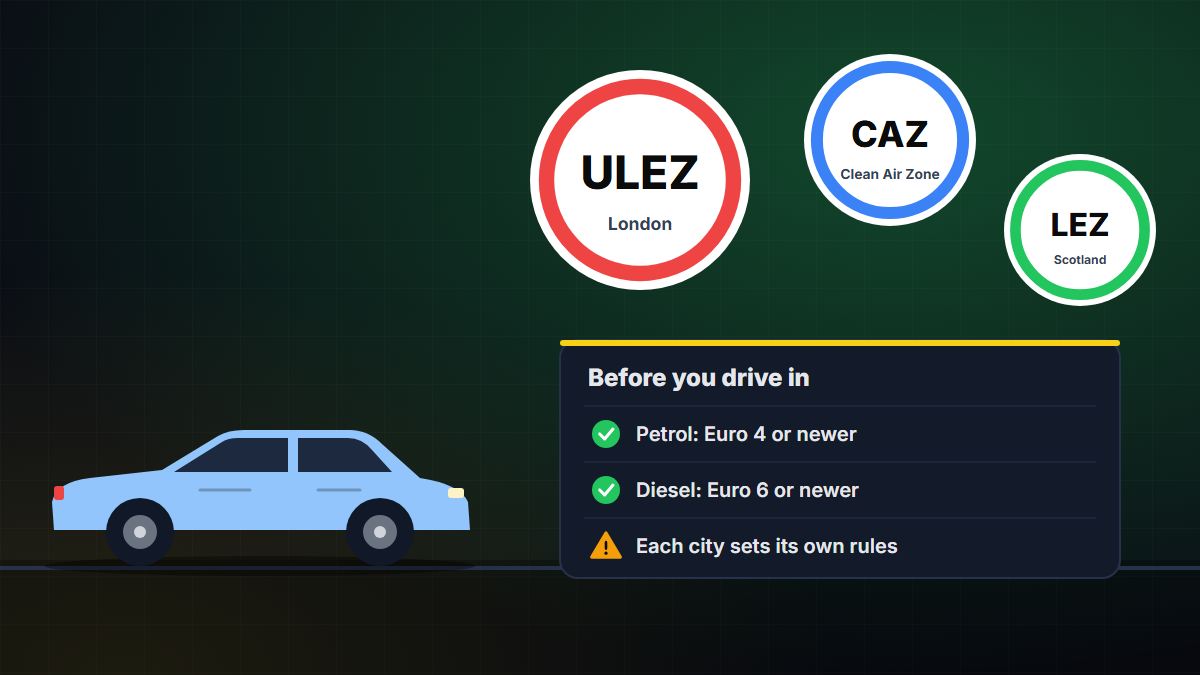
- ULEZ (London): the Ultra Low Emission Zone covers all London boroughs. Cars that don’t meet the standard pay a daily charge, currently £12.50.
- Clean Air Zones (England): each city chooses a class. Only class D zones charge private cars. Birmingham and Bristol are class D. Others, such as Bath, Bradford, Sheffield and Newcastle and Gateshead, are class C or lower, so they charge vans, taxis, buses and lorries but not private cars.
- Low Emission Zones (Scotland): Glasgow, Edinburgh, Aberdeen and Dundee. There’s no daily charge to pay: a non-compliant vehicle that enters gets a penalty notice, and the fine rises for repeat visits.
Some places go further. Oxford, for example, runs a small Zero Emission Zone in the city centre where only zero-emission vehicles drive free. Rules change often, so treat the details here as a guide and confirm on the official site before you travel.
Which cars are compliant?
Most zones use the same Euro emissions standards as London’s ULEZ:
- Petrol cars: Euro 4 or newer, usually cars first registered from 2006 (and some from 2001).
- Diesel cars: Euro 6 or newer, usually cars first registered from September 2015.
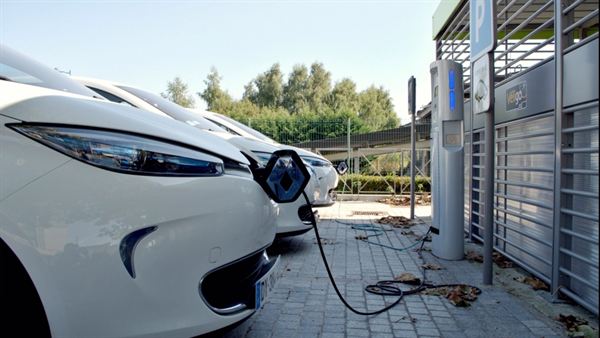
- Electric cars: always compliant.
Some older cars meet the standard and some newer ones don’t, so check the specific vehicle. Our guide Is my car ULEZ compliant? explains the Euro standards in more detail.
How to check a car
- Run a free car check on the registration. It shows the fuel type, first registration date and the Euro status where the DVLA records it.
- Use the official checkers: GOV.UK’s “Drive in a clean air zone” service for England, Transport for London’s vehicle checker for the ULEZ, and the Low Emission Zones Scotland website.
- If you’ll drive in a zone often, work out the yearly cost. A non-compliant car driven into the ULEZ on every weekday would cost over £3,000 a year.
Paying a charge
Charges are paid online, usually on the day or within a short window afterwards. If you don’t pay in time, you’ll get a penalty charge notice that costs far more than the daily charge. Beware of unofficial websites that add their own fees: always pay through the city’s or TfL’s own site.
Why it matters when buying
Non-compliant cars often look cheap, but the charges can quickly cost more than you saved, and they’re harder to sell near a zone. A compliant car usually holds its value better, especially in and around London and the cities above.
Frequently asked questions
Do all clean air zones charge private cars?
No. In England only class D Clean Air Zones, such as Birmingham and Bristol, charge private cars. London’s ULEZ charges non-compliant cars, and Scotland’s LEZs issue penalty notices instead of daily charges.
Is my car compliant everywhere if it’s ULEZ compliant?
Usually, because most zones use the same Euro 4 petrol and Euro 6 diesel standards. Always confirm with the official checker for the zone you’re visiting.
Do electric cars pay clean air zone charges?
No. Fully electric cars meet the standards of every UK emission zone.