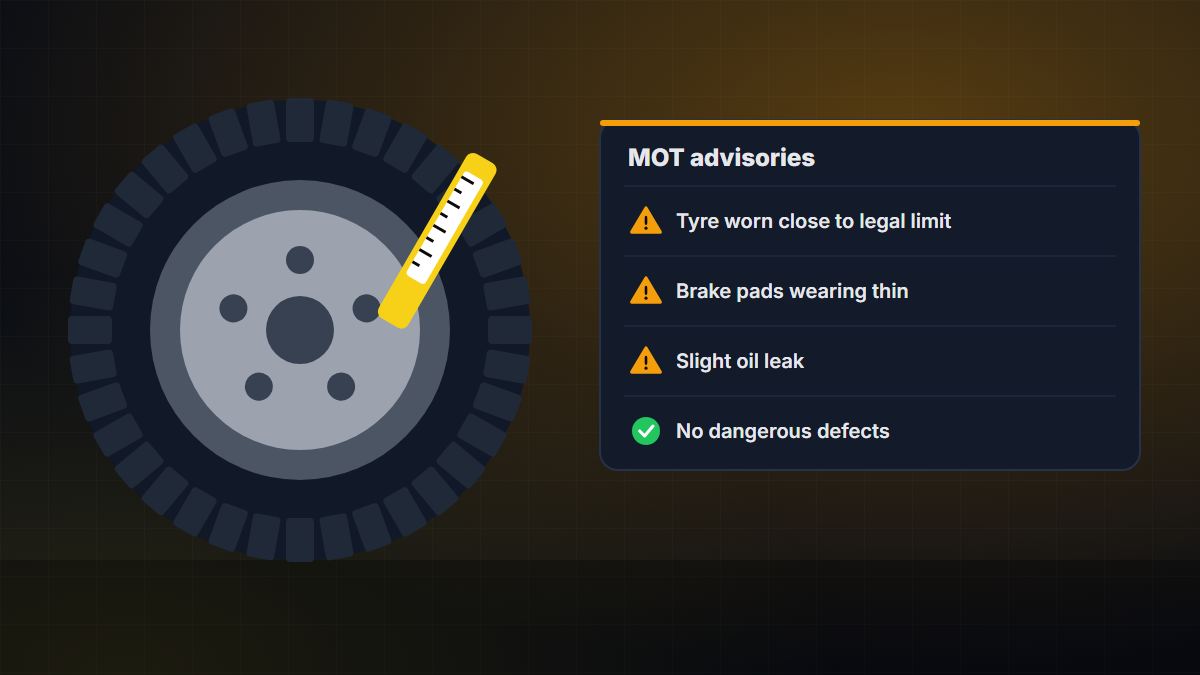
An MOT can pass with advisories: notes from the tester about things that aren’t bad enough to fail yet, but will need attention. On a used car, they’re a free preview of upcoming bills.
Advisories, minor, major and dangerous
- Advisory: something to monitor, such as tyres close to the limit or light corrosion. The car passes.
- Minor: a defect with no significant effect on safety. The car passes, but it should be repaired soon.
- Major: a defect that affects safety or the environment. The car fails until it’s repaired.
- Dangerous: a direct risk to road safety. The car fails and shouldn’t be driven until it’s fixed.
Advisories worth taking seriously
- Corrosion on brake pipes, subframes or suspension mounting points.
- Oil leaks, especially if they appear in several years.
- Worn suspension arms, bushes or ball joints.
- Brake discs and pads worn, which usually means a few hundred pounds soon.
Tyres “close to the legal limit” are cheap to sort and a fair point for negotiation, not a reason to walk away.
Look for patterns
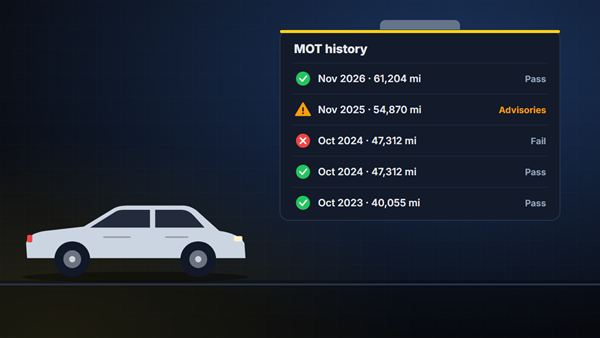
One advisory is normal. The same advisory repeated over several years means the owner hasn’t fixed it. Use our MOT history check to see every test side by side.
Using advisories to negotiate
Get a rough repair price for each advisory and ask for that off the asking price, or ask the seller to fix them first and show you the receipt.
Frequently asked questions
Can a car pass its MOT with advisories?
Yes. Advisories and minor defects don’t cause a fail. They’re a warning that work may be needed soon.
Do I have to fix MOT advisories?
There’s no legal requirement, but leaving them can lead to a fail next year or a safety problem.
Where can I see a car’s past advisories?
In its MOT history, which you can check free by registration.