Electric cars in China can cost much less than in the UK, so it’s tempting to import one yourself. It can be done, but it’s far more complicated than importing from Japan. Chinese cars are left-hand drive, built for different standards, and EVs bring their own problems. Here’s what’s involved.
The big differences from a UK car
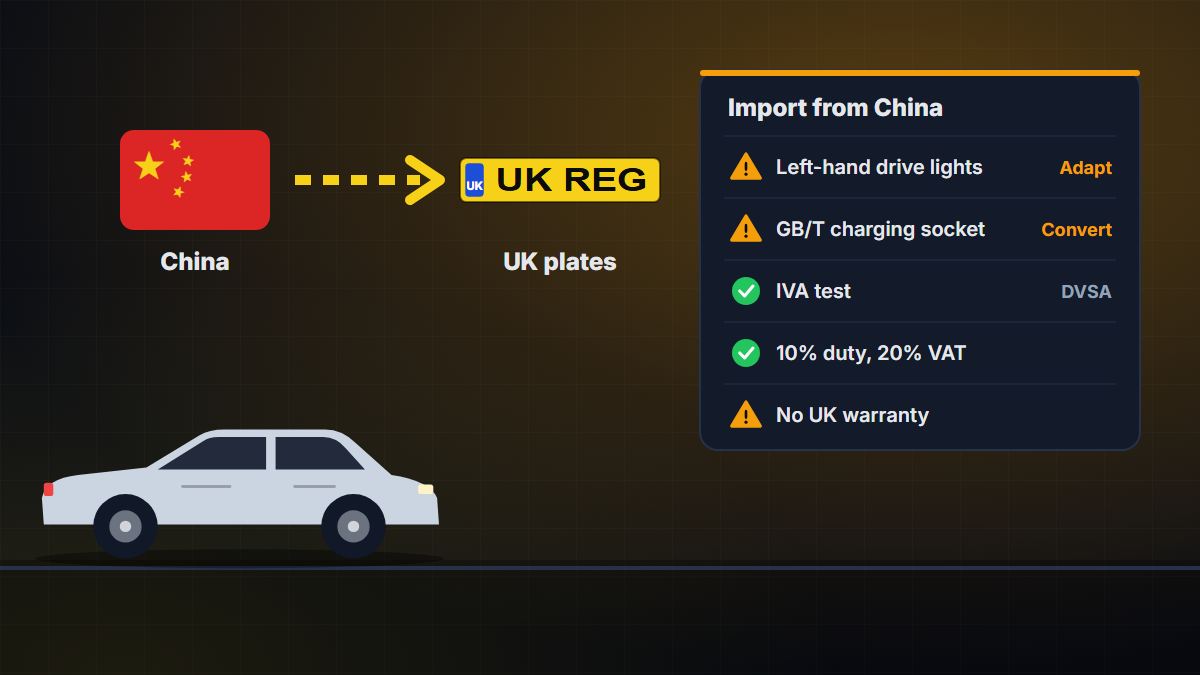
- Left-hand drive: China drives on the right. The headlights must be adjusted or replaced for driving on the left, and the speedometer must show miles per hour.
- Charging sockets: Chinese-market EVs use the GB/T charging standard, not the Type 2 and CCS sockets used in the UK. Without a conversion, the car may not charge at UK public chargers.
- Software and language: the screens, apps, maps and voice control may only work in Chinese and rely on Chinese mobile networks and services.
- No UK warranty or dealer support: UK dealers of the same brand may refuse to work on a Chinese-market car, and parts can be hard to get.
The import process
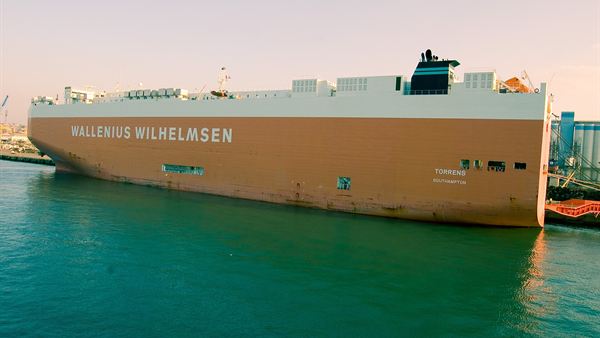
- Shipping: by sea, usually 6 to 10 weeks. EV batteries are classed as dangerous goods, so you need a shipper that can carry them, and costs are higher.
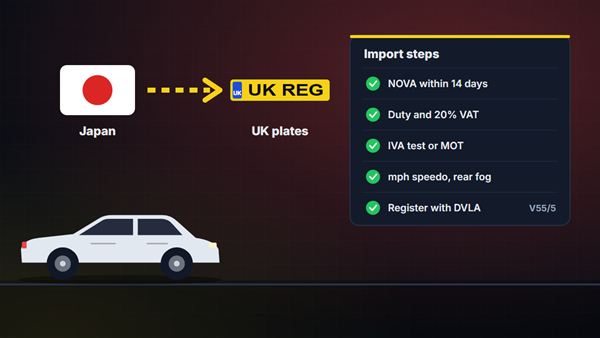
- NOVA: tell HMRC the car has arrived within 14 days using the Notification of Vehicle Arrivals service.
- Duty and VAT: import duty is normally 10% of the value plus shipping, then 20% VAT on the total. There’s no UK trade agreement with China that reduces this.
- IVA test: a car under 10 years old needs an Individual Vehicle Approval test at DVSA to prove it meets UK safety and construction standards. Lighting, mirrors, seat belts and the speedometer are common reasons for failure.
- MOT: cars over 3 years old also need a UK MOT.
- DVLA registration: apply with form V55/5, the NOVA reference, the IVA certificate, proof of identity and insurance and the £55 fee. You then get a UK registration number and a V5C.
Is it worth it?
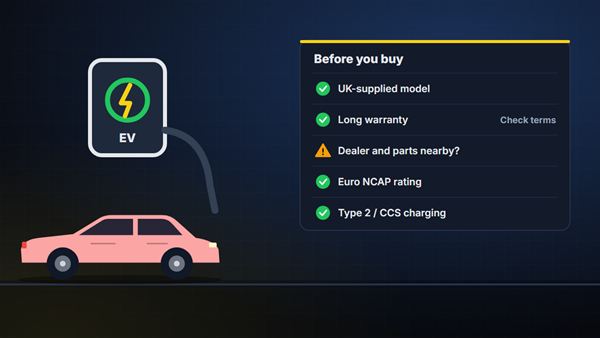
For most people, no. Once you add shipping, duty, VAT, the IVA test, headlight and speedometer changes and a charging conversion, much of the saving disappears, and you’re left with a car that has no UK warranty and may be hard to insure, service and sell. Many Chinese brands now sell UK-supplied models through UK dealers instead. Read our guide to buying a Chinese electric car in the UK.
Buying a Chinese import that’s already here
- Check that the IVA certificate and V5C are genuine and that the VIN matches the car. See how to decode a VIN.
- Check that the car charges at UK chargers and that the software works in English.
- Run a free car check, and look for outstanding finance and write-offs with a full report.
Frequently asked questions
Can I import an electric car from China to the UK?
Yes, but it must pass an IVA test if it’s under 10 years old, have its headlights and speedometer adapted, and it may need a charging conversion because Chinese EVs use the GB/T standard.
What import duty do I pay on a car from China?
Normally 10% duty on the car’s value plus shipping, then 20% VAT on the total, including the duty.
Will a Chinese-market car have a UK warranty?
Usually not. The UK warranty normally covers only cars sold new through the brand’s official UK network.