When an insurer decides a damaged car isn’t worth repairing, it’s “written off” and given a category. Two of those categories, S and N, can legally return to the road. Here’s what they mean for buyers.
The four categories
- Category A: scrap only. The whole car must be crushed.
- Category B: break for parts. The body shell must be crushed, but some parts can be reused.
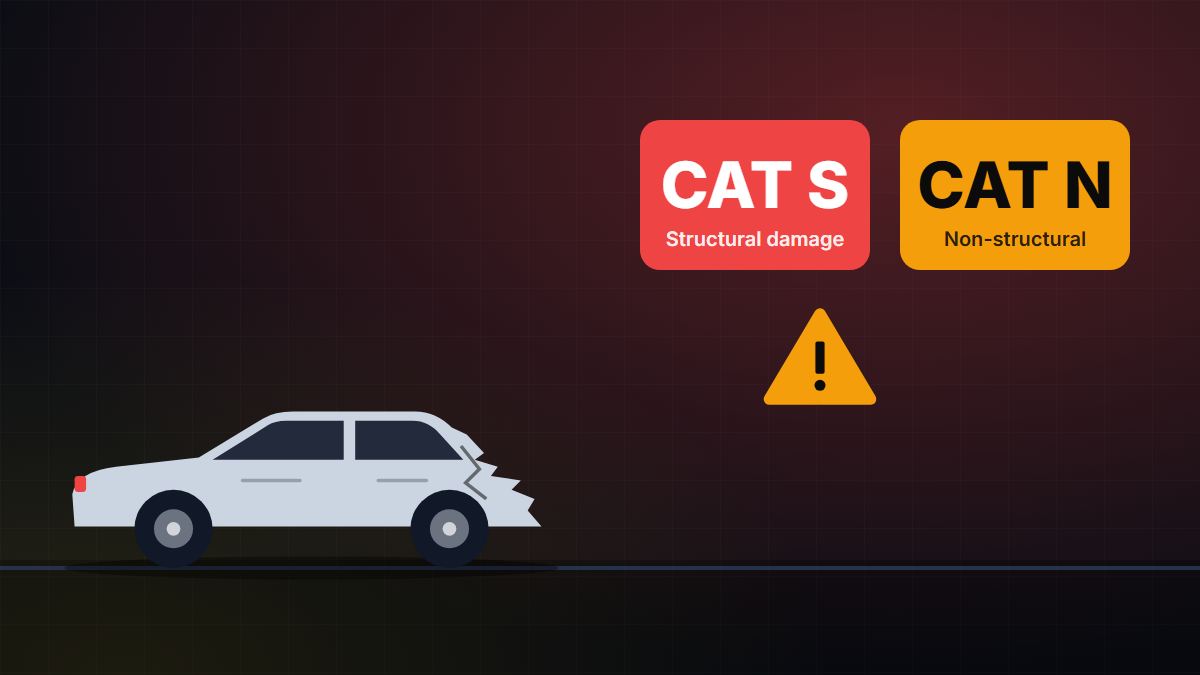
- Category S: structural damage, such as to the chassis or crumple zones. It can be professionally repaired and put back on the road.
- Category N: non-structural damage, such as cosmetic or electrical faults. It can be repaired and put back on the road.
These categories replaced the old C and D categories in October 2017. You may still see older cars recorded as Cat C or Cat D.
Is a Cat S or Cat N car safe?
It can be, if it was repaired properly. The risk is that you can’t see the quality of structural repairs from the outside. For Cat S in particular, ask for the repair invoices and get an independent inspection.
“Written off” is about cost, not just severity. An expensive car with modest damage might be repaired, while an older car with the same damage is written off because repairs cost more than it’s worth.
How much cheaper should it be?
Expect a written-off car to be worth roughly 20% to 40% less than the same car with a clean history. It may also be harder to insure and harder to sell later, so factor that into the price.
How to find out
Sellers must tell you about a write-off, but not all do. Our write-off check searches insurance records by registration and shows the category and date.
See also: Buying a write-off from a salvage auction like Copart
Frequently asked questions
Can you insure a Cat S car?
Yes, most insurers will cover a Cat S or Cat N car, but some charge more or refuse. Get a quote before you buy.
Do I need to tell the DVLA about a Cat S car?
The insurer reports the write-off. If you repair a Cat S car yourself, you must tell the DVLA before using it on the road.
Is Cat N better than Cat S?
Generally, yes. Cat N damage didn’t affect the car’s structure, so there’s less risk from hidden repairs.