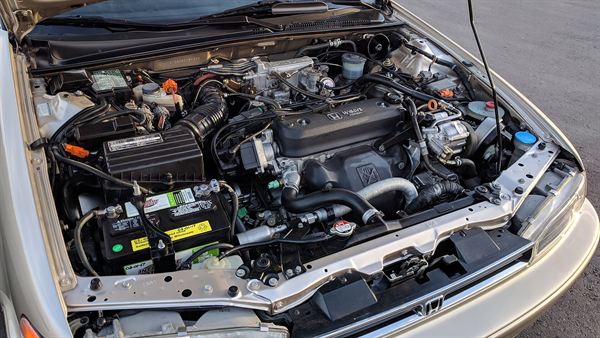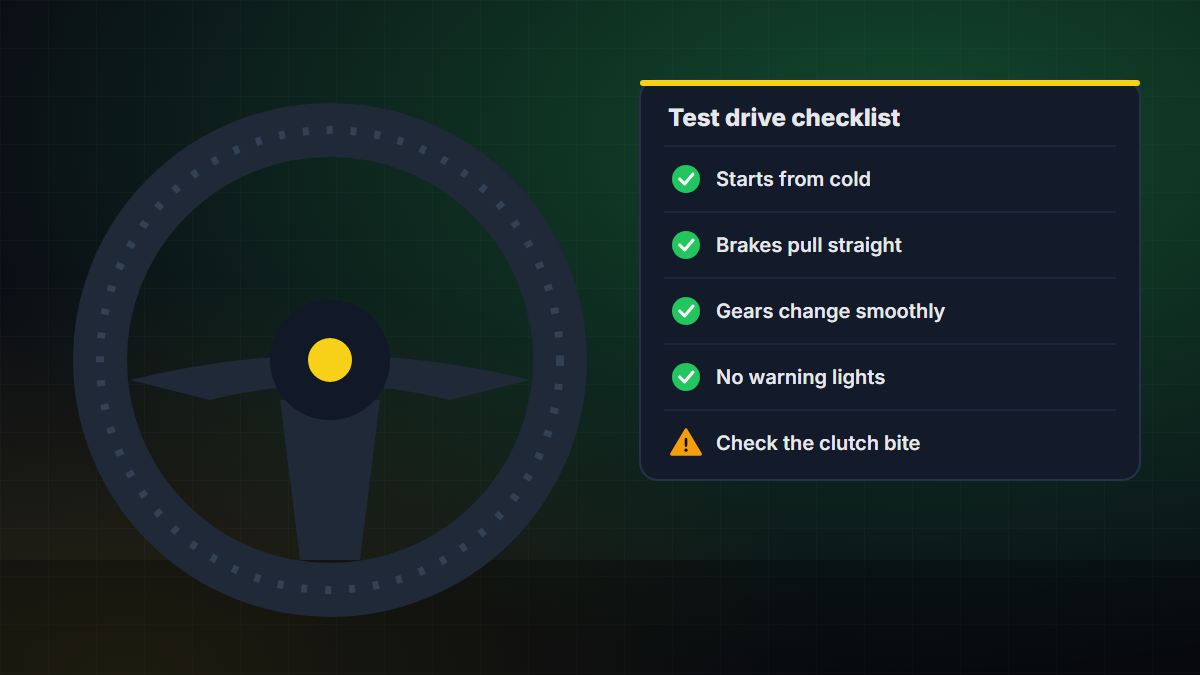
A proper test drive tells you more about a used car than any advert. Allow at least 15 minutes and try to cover town roads, a faster road and some bumps.
Before you set off
- Make sure you’re insured to drive it. Your own policy may not cover you automatically.
- Ask for the engine to be cold when you arrive. A warm engine can hide starting problems.
- Check all the warning lights come on with the ignition, then go out once the engine starts.
- Look for smoke from the exhaust when it starts.
During the drive
- Brakes: the car should stop straight, without pulling, juddering or squealing.
- Steering: it should feel precise and the car shouldn’t wander on a straight road.
- Gearbox: changes should be smooth. A clutch that bites very high may be worn.
- Suspension: listen for knocks and clunks over bumps.
- Engine: it should pull smoothly without hesitation, rattles or warning lights.
Test everything inside
Try the air conditioning, heater, windows, central locking, lights, wipers, infotainment and any parking sensors or cameras. Small repairs add up.
After the drive
Look under the car for drips and check the temperature gauge. Then compare what you’ve found with the car’s MOT history: has the same problem been flagged before?
Frequently asked questions
How long should a test drive be?
At least 15 to 30 minutes, on a mix of roads, so the engine reaches full temperature.
Am I insured to test drive a car?
Not always. Dealers usually have trade cover. For private sales, check your own policy or buy short-term cover.
Should I test drive a car in the rain?
Daylight and dry weather are better for spotting paint and body faults, but a wet test drive can reveal leaks.